Your notes remember. Your tools don't.
You've been working on the same project for three months. Every week you add notes, tasks, decisions. The names of the people involved, the recurring blockers, the terminology that only makes sense inside that context — it's all there, buried in your outline.
Then you open a chat with an AI assistant and start from zero. You explain the project. You explain who Carlos is. You explain what "the onboarding flow" means in this particular context. Again. Every single time.
That friction isn't a minor inconvenience. It's what makes AI tools feel generic — because they are. They don't know your work. They know language.
Fromly works differently. Each context you create builds its own living knowledge base, updated automatically as you write.
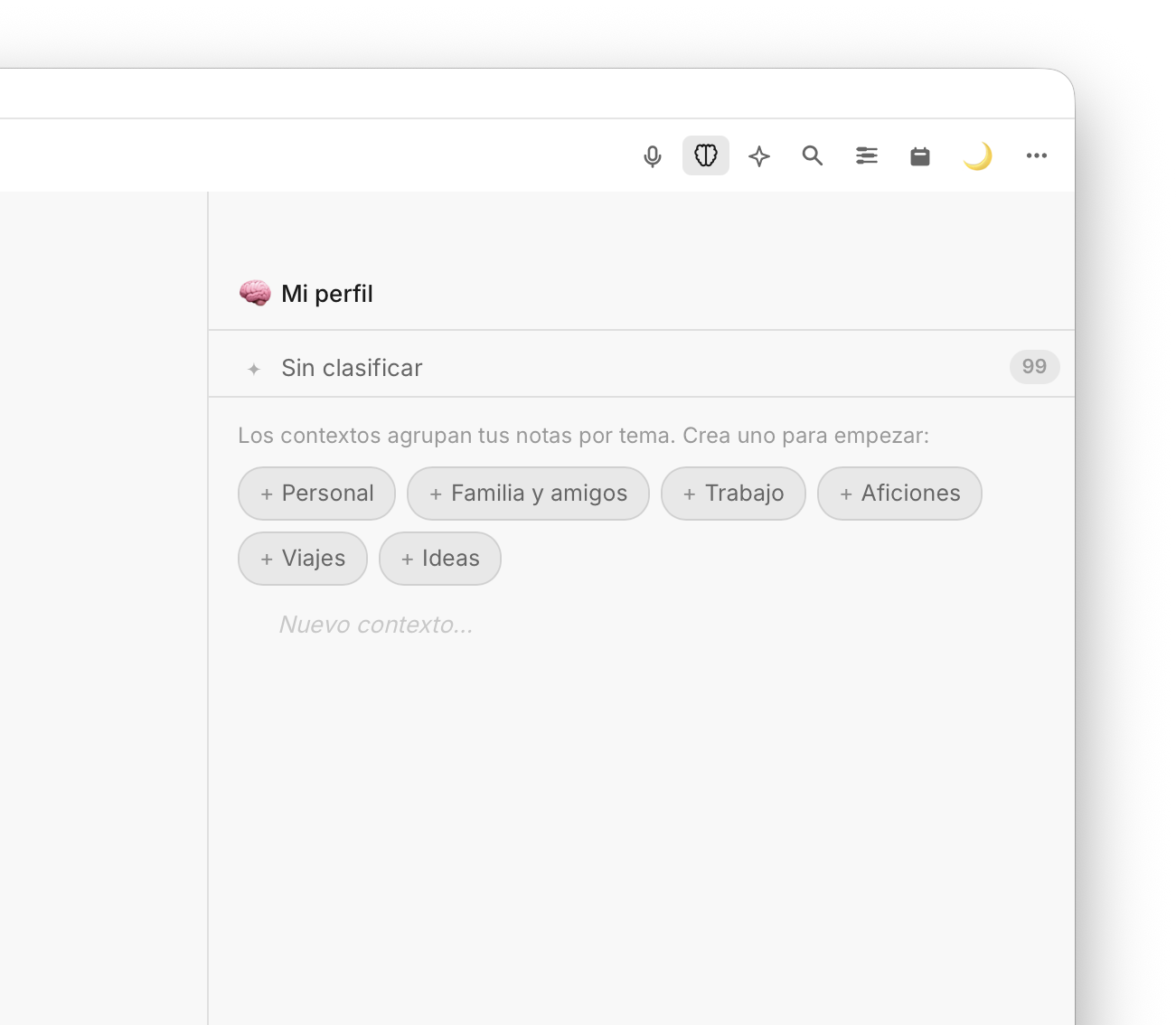
Fromly already knows what you're working on — no setup required.
What "context knowledge" actually means
Every context in Fromly — every Area, every Project — has a tab called Context. That's where a real document lives: "What Fromly knows", which you can open and read at any time. It's not a hidden database or a black box — it's readable text that summarizes what Fromly has understood about that space.
What matters is how that document gets written. You don't fill it in. Fromly watches what you save in the context — notes, tasks, conversations, documents — and decides on its own what's worth recording there. That includes:
- Keywords — terms that appear frequently and carry weight in that context
- People — names that show up repeatedly, linked to tasks, decisions, or notes
- Recurring topics — themes that surface across multiple entries over time
- Relationships between entries — what connects to what, what follows what
Fromly detects all of this automatically, without you tagging anything, filing anything, or telling it what matters. You just write. Fromly pays attention — and decides what's significant enough to make it into the document.
Why this changes how the chat works
When you open the chat inside a context, it already has this knowledge loaded. It knows the vocabulary of that space. It knows the people involved. It knows what you've been working on.
Ask it to write a summary of the project and it won't ask "which project?" Ask it to draft a follow-up with Marta and it knows who Marta is and what she's related to. Ask it what's pending and it reads the actual state of your context, not a generic to-do list.
Context knowledge turns Fromly from a generic chatbot into something that feels like a collaborator who was in the room the whole time. And it isn't a knowledge dump that only grows — Fromly can rewrite an earlier line to keep it accurate, or merge two related facts into one, so the document stays short and useful instead of turning into an ever-growing list.
This is not about feeding prompts with attachments. It's not about copy-pasting your notes into a chat window. The knowledge is already there, pre-loaded, because Fromly built it — and keeps rewriting it — as you worked.
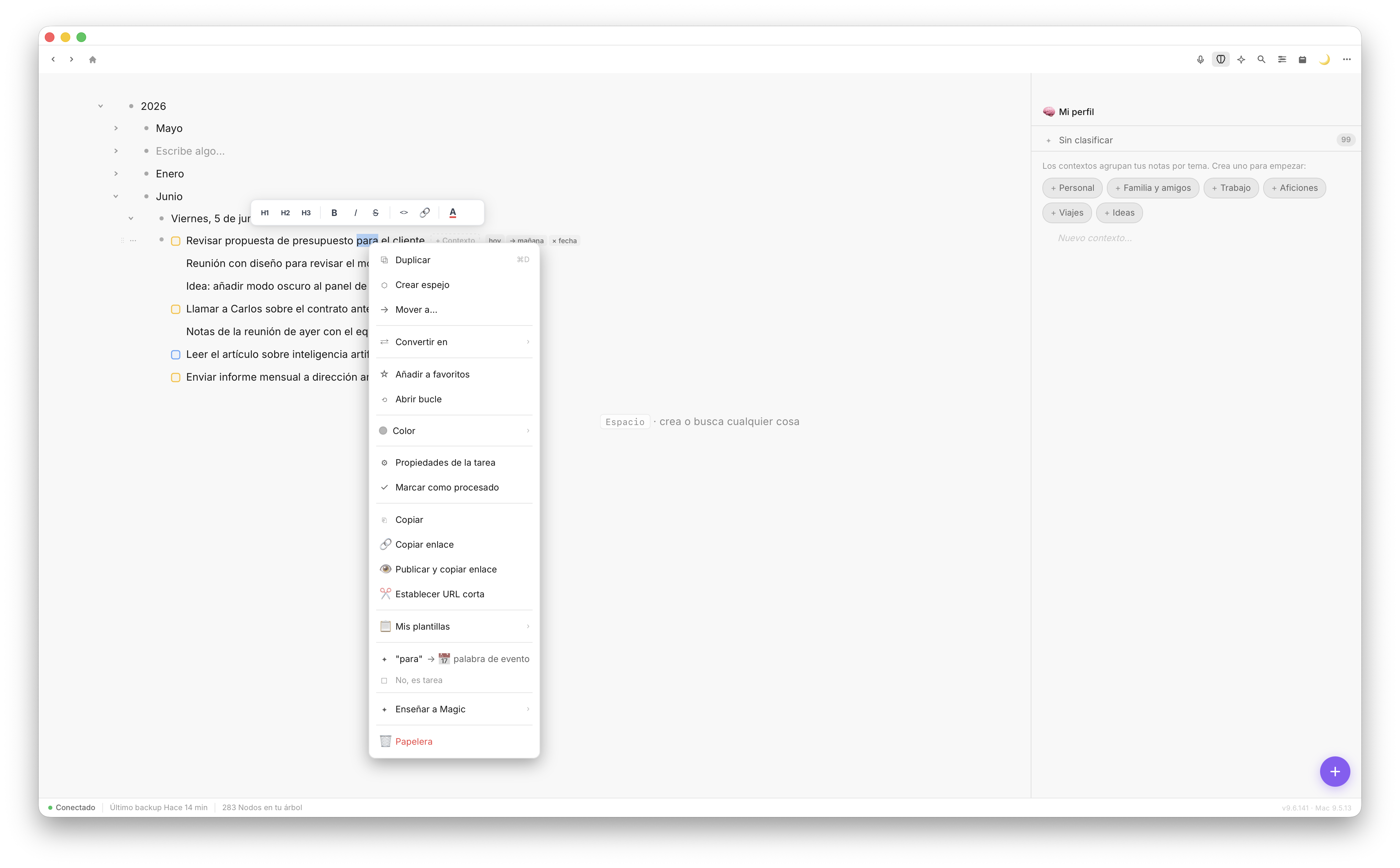
Answers that reflect what's actually in your context — not generic suggestions.
A concrete example: a client project
Say you have a context called "Redesign — Acme Corp". Over four weeks you've added:
- Meeting notes with references to Laura (design lead), Tom (engineering), and the "token system" decision
- Tasks around the navigation review and the mobile breakpoints
- A note about the constraint: no changes to the backend before Q3
Fromly has been reading all of this. When you ask the chat "what are the open blockers?", it doesn't search the internet. It reads your context. It surfaces the backend constraint, the unresolved mobile breakpoints, the tasks still pending from the last meeting.
When you ask "who's responsible for the token system?", it connects that topic to the entries where Laura was mentioned. No setup. No tagging. No linking. Just writing, over time, and Fromly doing the work of remembering.
How to get the most out of context knowledge
You don't need to do anything special to activate this. But a few habits make it significantly more useful:
- Write inside the right context. Notes and tasks added to a context contribute to its knowledge. If you dump everything in one place, the signal is noisy. Separate contexts give sharper knowledge.
- Use consistent names. If you refer to the same person as "Laura", "L.", and "the design lead" interchangeably, Fromly has less to work with. Consistency builds better knowledge faster.
- Let it accumulate. Context knowledge improves over time. A context with two weeks of entries gives the chat far more to work with than one with three notes.
- Ask specific questions. The more grounded your question in the actual work ("what did we decide about X?"), the more useful the chat's answer will be.
The practical result
Context knowledge means Fromly gets more useful the more you use it — not in spite of having a lot of notes, but because of it. Every entry sharpens what Fromly understands about that space, and Fromly keeps the summary itself sharp too — rewriting or merging what it already knew instead of just piling on more. Every conversation builds on a foundation that's already there, already yours, already accurate.
You stop explaining your work to your tools. Your tools start knowing your work.