Fromly learns from you, not the other way around
When you start using Fromly, it already knows a lot. It understands that "call dentist tmrw" is a task for tomorrow, that "idea: redesign the site" is a note with creative intent, and that "gym 7am" is an event. But you don't write like a user manual. You write like yourself.
That's where friction shows up. Fromly interprets, you correct it, and if that correction isn't saved anywhere, it fails the same way next time. It's the classic problem with any tool that "learns": it learns in a lab, not with you.
Fromly solves this with a feature as discreet as it is powerful: you can teach it directly, in the moment, when it gets something wrong.
How to teach it and why it matters
When Fromly classifies, formats, or interprets something in a way that doesn't match how you work, you can correct it on the spot and tell Fromly to remember it.
It's not a setting in a preferences panel. It's not filling out a feedback form. It's as simple as right-clicking any note or task and correcting what it got wrong.

Right-click any note — correct what Fromly got wrong, right there.
From that moment on, Fromly applies your correction consistently. Not once. Always.
The problem it solves: the correction that gets forgotten
Say you write your ideas in shorthand. "launch july promo → email list" — you write it that way because it's fast, because it's yours. Fromly turns it into a task with a July date and an email subcategory. Fine. But that's not the level of detail you want — you'd rather it stayed a project note, with no explicit date.
Without this feature, you have two options: fix it by hand every time, or give up. By correcting it once and explaining it to Fromly, the next time you write something similar, Fromly already knows.
You're not training a generic model. You're refining your instance of Fromly.
How to use it: three steps
- Write normally. Don't change how you write just so Fromly understands you. Write the way you always do.
- When something doesn't fit, right-click the note. Fromly opens a panel where you can explain what it should have done and what you want it to do from now on.
- Keep working. Fromly applies the correction from that moment on, without interrupting you.
The key is immediacy. You correct it in the exact context where the error appeared — not in the abstract. That's what makes the correction precise, and lets Fromly generalize it correctly to similar situations.
Concrete examples of what you can teach it
It's not just for classification. It works for any part of Fromly's behavior that doesn't match your flow:
- Date format: If you always write "Monday" and want Fromly to read it as next Monday, not a generic day.
- Default priority: If in your system everything starting with "!" is urgent, you can teach it that.
- Item type: If "idea:" should always be a note and never a task, define it once.
- Your abbreviations: "mtg" always means meeting. "lnch" always means launch. Fromly learns it.
- Project structure: If your projects always have a "pending" task and a "done" one, Fromly can replicate that automatically.
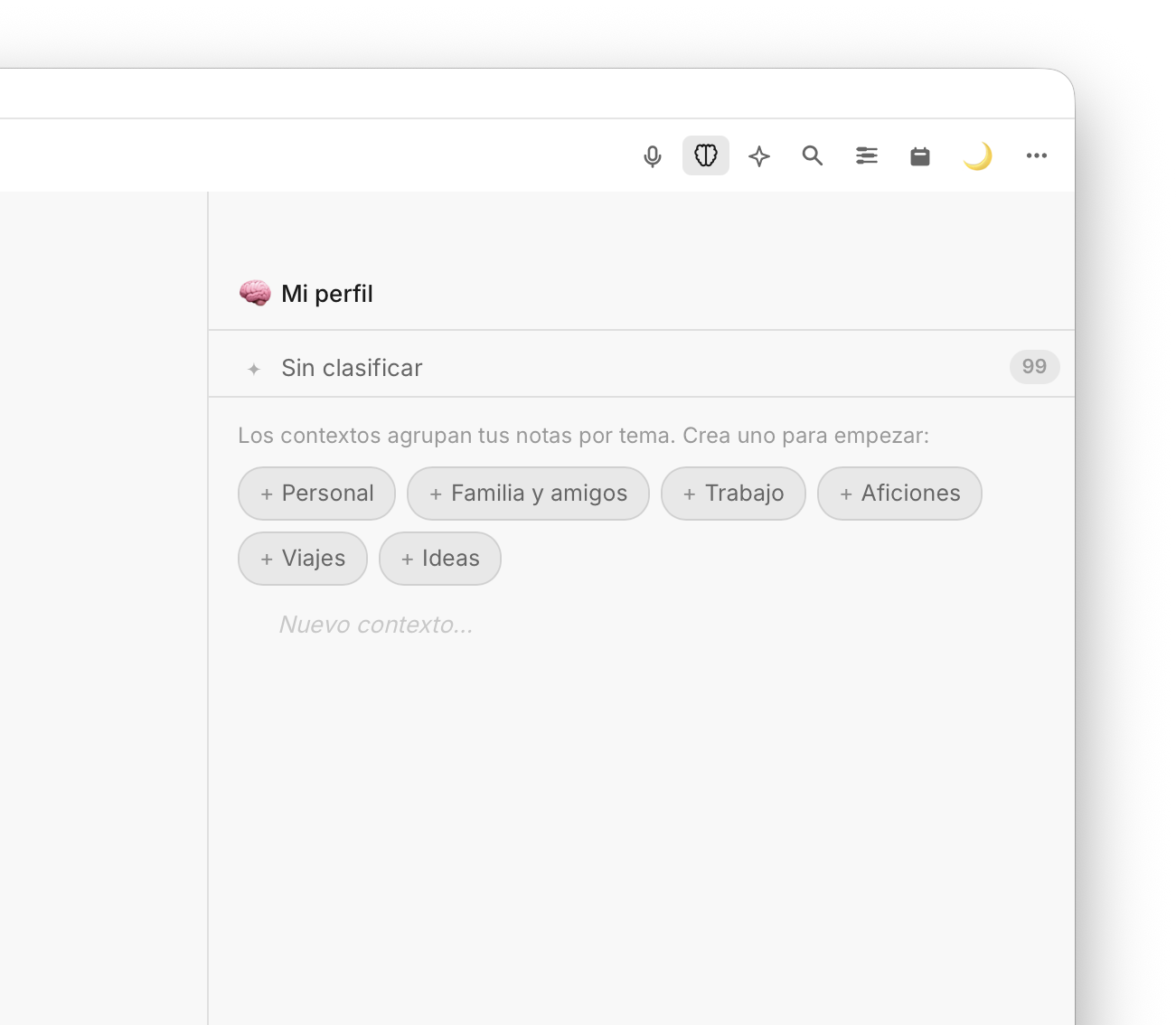
Fromly interprets what you write in real time — correct it and that behavior adjusts to how you work.
Why this is different from "customizing the AI"
Most tools with smart assistance give you a settings panel. You define preferences in the abstract, hope it works, and when it doesn't, you go back to the panel.
Fromly works the other way around: you correct it in the real context, right when something goes wrong, with the note in front of you. Fromly infers the rule from the concrete example. You don't need to know how to phrase it or anticipate every case — Fromly generalizes from what you show it.
It's the difference between configuring and teaching.
The cumulative effect
Every correction you make makes Fromly more precise — for you, specifically, not for the average user. Over time, the need to correct it drops because Fromly already knows your patterns, your vocabulary, the way you structure your work.
In the end, you write just as fast as always, but Fromly stops interpreting and starts recognizing.
The result
Teaching Fromly turns every correction into a permanent improvement. You don't waste time readjusting the same thing twice, and Fromly adapts to how you work instead of you having to adapt to it. Right-click, one explanation, done — Fromly applies it from that moment on.