Every tool you use asks you to set it up. Fill in your name, your goals, your preferences. Tell it what matters. Then tell it again next week, because it forgot. Fromly doesn't work that way.
You write in the central chat, in plain language, and as you do, every context you work in — a project, a client, a topic — quietly builds its own memory: a living document, "What Fromly knows," that updates on its own and that you can read anytime from the Context tab. It's not a profile you fill in. It's one that emerges on its own, from what you write day to day.
The problem with "smart" tools that don't remember
Most productivity software is stateless. Every session starts from zero. You can have a hundred tasks in the system and the assistant still asks you what you're working on. It has no sense of who you are, what matters to you, or what context surrounds each item you write.
The result is constant friction. You spend more time briefing your tools than using them. You explain the same priorities over and over. You give context that should already be obvious. It's exhausting — and it defeats the purpose of having a system at all.
Fromly solves this at the root. Instead of asking you to define your context, it extracts it from what you write, over time, automatically.
How Fromly builds your profile
When you write in Fromly — tasks, notes, ideas, plans — certain things recur. Projects you return to. People you mention. Goals that show up in multiple places. Fromly tracks these patterns quietly, within each context, and builds a profile from them.
This isn't keyword matching or a simple tag system. Fromly identifies what's durable versus what's transient. A task that appears once and gets done doesn't define you. A project you've been building toward for months does. The profile captures the latter, not the former — and folds it into that context's "What Fromly knows" document, rewriting or merging it as needed, not just appending to the bottom.
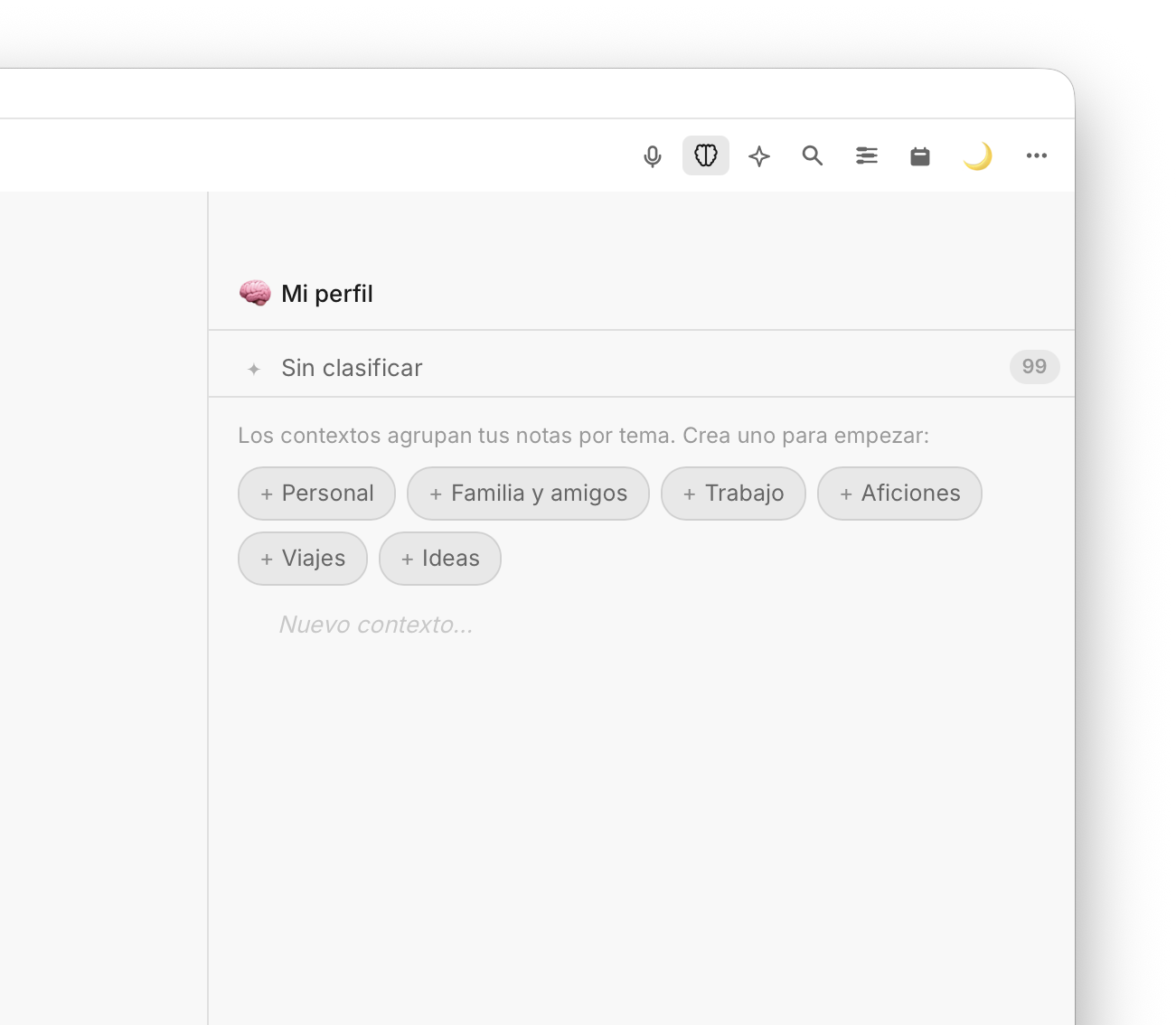
Fromly's context panel — where your profile shapes every response
The profile includes things like:
- Active projects — what you're genuinely working on right now, inferred from task density and recency
- Key people — names that appear repeatedly across your notes and tasks
- Goals and priorities — themes that show up consistently in how you frame your work
- Working patterns — when you tend to plan, review, or capture ideas
None of this requires you to declare anything. You write, Fromly observes, the profile updates.
What changes when Fromly knows you
The difference becomes visible the moment you open the chat. Instead of a blank slate, you get responses that already know your context. Ask "what should I focus on today?" and Fromly doesn't generate a generic answer. It looks at what you've written, what's overdue, what you've been building toward — using that context's memory — and responds from that foundation.
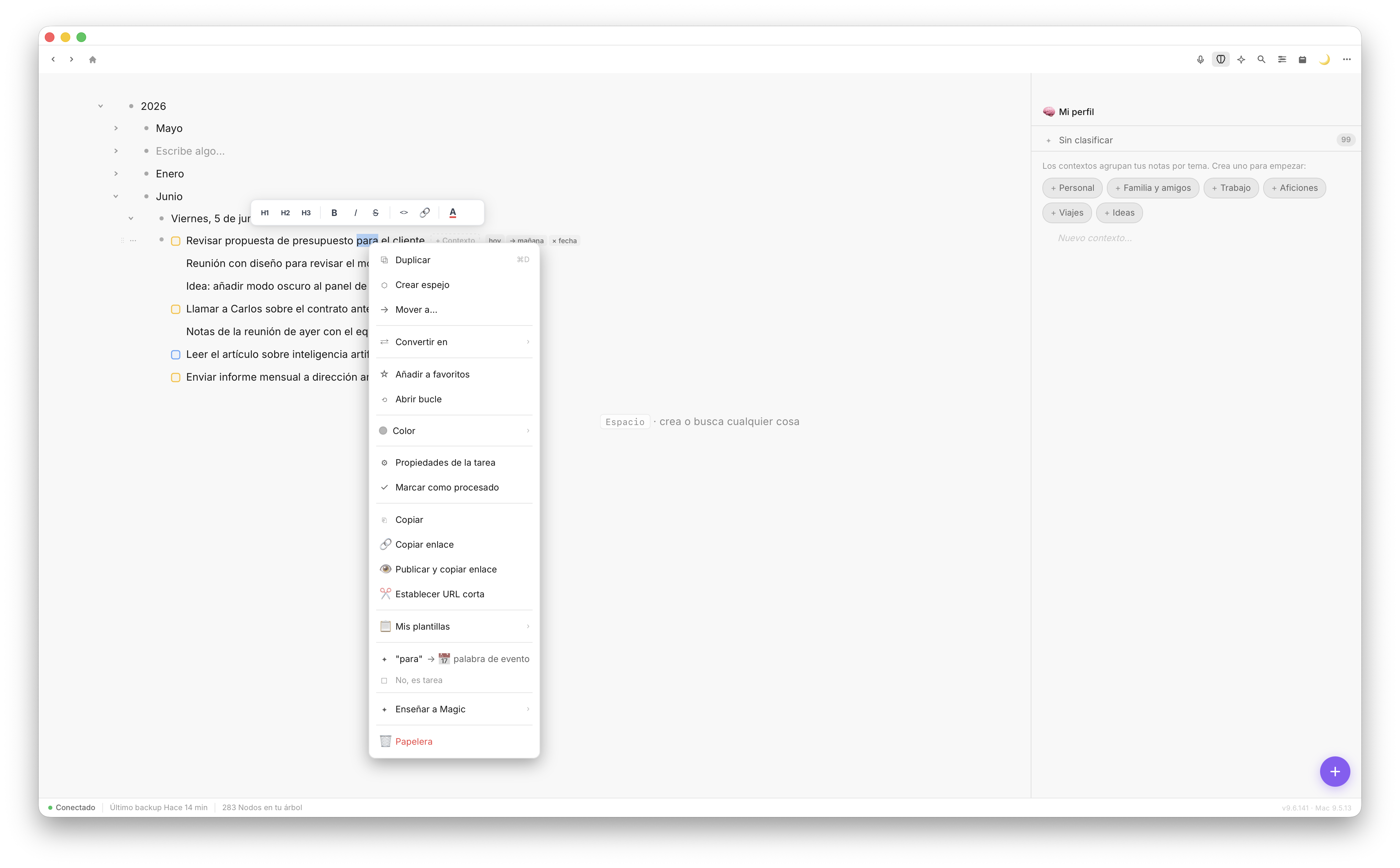
Fromly responds with full context — no briefing required
Concrete examples of what this unlocks:
- Contextual suggestions. When you're about to plan your week, Fromly already knows which projects are active and which are stalled. It doesn't suggest generic tasks — it surfaces the specific things that matter to your current situation.
- Smarter search. When you search or filter your notes, results are weighted by relevance to your profile. Things connected to your active priorities float up. Old, disconnected items stay out of the way.
- Continuity between sessions. You can close Fromly, come back three days later, and pick up exactly where you were. Not because you bookmarked anything, but because your profile persists and shapes what you see first.
The right kind of memory
There's a real risk with tools that try to remember everything: they become noise machines. Every throwaway note, every abandoned idea, every temporary plan accumulates into a profile that reflects the past, not the present.
Fromly handles this through recency and signal strength. Recent activity carries more weight. Things you act on repeatedly matter more than things you write once. Items you mark done or delete fade from the profile naturally. The result is a profile that stays current without any manual curation from you.
You don't manage the profile. You just use Fromly — and the profile takes care of itself.
How to get the most out of it
Because Fromly builds your profile from natural writing, the best way to strengthen it is simply to use Fromly consistently for your actual work. A few habits that accelerate the process:
- Write in context. When you capture a task, give it a sentence of context. Not for Fromly — for yourself. But Fromly reads it too, and it helps the profile stay accurate.
- Use the daily note. The today view is where Fromly anchors your current focus. Writing there daily gives the profile a strong signal about what actually matters right now.
- Keep things in the right context. Assigning a note or task to the project or client it belongs to helps Fromly understand relationships. An item filed under the right context is more informative than a flat, unsorted list.
A tool that keeps up with you
Fromly's profile isn't a setup step — it's an ongoing layer that runs underneath everything you do. The longer you use it, the more accurate it becomes, and the less friction you experience. You stop explaining yourself to your tools. You just work, and Fromly keeps up.
That's the version of smart software that actually earns the label. Not a feature you toggle on — a capability that grows with you, invisibly, every day you use it.